



















What does a Next.js development agency build for a startup?
A Next.js development agency builds your marketing site as a real codebase: React components, a headless CMS for content, server or static rendering for speed and SEO, and deploys from your repository. You get the flexibility of code with an editing experience your marketing team can use without filing tickets.
This page is for teams that have decided, or are close to deciding, that the site belongs in code. If you're still choosing a platform, our guide to Next.js for marketing websites explains when code is worth it.
Deliverable | What it covers |
|---|---|
Copy and design | Messaging, page copy and custom Figma designs for every page |
Next.js codebase | App Router, TypeScript and a component library that matches the design |
Headless CMS | Content types, live preview and editor roles in Payload, Sanity or your existing CMS |
Rendering and caching | Static or server rendering per page, with revalidation when content changes |
SEO foundations | Metadata, sitemaps, canonical URLs, structured data and redirects |
Integrations | CRM forms, analytics, consent, scheduling, and product data where useful |
Deploy pipeline | Preview deploys for every change, production deploys from your main branch |
Docs and handoff | A README, CMS walkthrough and an engineering handoff call |
When is Next.js the right choice for a marketing site?
Next.js is the right choice when your marketing site needs to behave like software: shared code with your product, logged-in states, data from your own API, heavy localization, or performance and security requirements that a visual builder can't meet. It's also right when your engineering team wants every change reviewed in a pull request.
- Shared design system: the site uses the same components and tokens as your app
- Product data on the site: live pricing, public status, usage numbers or template galleries pulled from your API
- Complex content: thousands of pages, programmatic SEO or many locales with structured fields
- Security reviews: enterprise buyers or compliance teams that want to know exactly what runs on the site
- Ownership: a codebase you can move between hosts, with no per-seat editor pricing
Which headless CMS should a Next.js site use?
The CMS should match who edits the site and where you want content to live. We most often use Payload or Sanity, and we'll work with Contentful or another CMS you already pay for.
CMS | Best when | Trade-off |
|---|---|---|
Payload | You want content in your own database, inside the Next.js app | You host and back up the database |
Sanity | Editors want a polished hosted studio and real-time collaboration | Usage-based pricing as content and traffic grow |
Contentful | You already use it across teams or products | Tier jumps can make it expensive for a single site |
MDX in the repo | Engineers write most of the content | Non-technical editors can't publish alone |
Whatever the CMS, the editing layer is where headless sites succeed or fail. We set up live preview, field help text and reusable page sections so marketing can build a new landing page from blocks without an engineer. Our comparison of Contentful, Sanity, Payload and Strapi goes deeper, and our Sanity integration page covers that setup specifically.
How we keep Next.js sites fast
A Next.js site is not fast by default; it's fast when it ships little JavaScript to the browser. Field data compiled by corewebvitals.io for Q2 2026 shows only about two-thirds of Next.js sites pass Interaction to Next Paint, with a median around 236ms, so performance has to be designed in, not assumed.
- Server Components by default, with client components only where there's real interactivity
- Static rendering for marketing pages, with on-demand revalidation when the CMS publishes
- Optimized images and fonts through Next.js's built-in image and font handling
- Third-party scripts loaded late, because analytics, chat and tag managers are the usual cause of slow interactions
- Motion built with care, animating transform and opacity rather than layout
Server-rendered HTML also matters for AI search, because many AI crawlers don't run JavaScript. Our Next.js SEO checklist lists the metadata, sitemap and schema work we do on every build, and our post on improving INP on Next.js sites explains the performance side.
How does a Next.js project run with us?
We work like an embedded product team: words and design first, then code in your repository with preview deploys you can review at every step.
Intro call
A free 30-minute call with you and, ideally, an engineer. We cover goals, the content model, hosting and what the site has to integrate with.
Copy and structure
We write the key pages and agree the sitemap and content types, so the CMS schema follows the content, not the reverse.
Design in Figma
Every page designed at desktop and mobile sizes, with components that map one-to-one to the code we'll write.
Build
We build components, pages and the CMS schema in TypeScript, with a preview deploy for every change your team can click through.
Integrations and QA
Forms, analytics, consent and redirects wired up, then tested across browsers, devices and Core Web Vitals.
Launch and handoff
We deploy to your hosting account, walk marketing through the CMS and hand engineering a documented codebase.
Where should a Next.js site be hosted?
Host where your team already works, unless cost or performance says otherwise. Vercel is the most common choice for Next.js and charges per team seat, about $20 per member, plus usage. Cloudflare Workers is usually the cheapest at scale; we run our own site on Next.js and Payload on Workers. We set up whichever fits, in an account you own.
What does a Next.js development agency cost?
Next.js agency builds typically run from about $20,000 to $120,000 in the quotes we see, depending on page count, CMS work, integrations and whether copy and design are included. Prices vary widely by agency and region.
- Typical Next.js agency build range we see quoted
- $20k–$120k
- Designify website package, up to 6 pages, Next.js
- $8,000
- Each extra page
- +$500
Our website package is $8,000, fixed, for up to six pages with copy, custom design, a Next.js build and animation included, and each extra page is $500. Large CMS migrations and deep product integrations are scoped on the intro call. Our Next.js website cost guide breaks down what drives the price.
Startups we've designed and built for
We've delivered 60+ projects across 14+ industries, from fintech to cybersecurity, where buyers look hard at how a company presents itself:
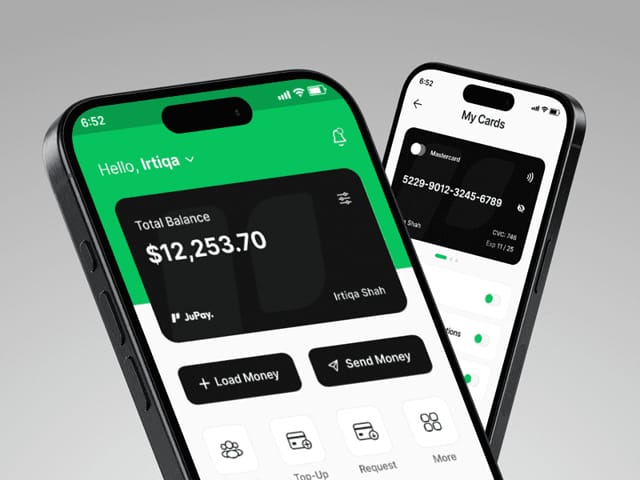
- Jupay: we designed and built the site for this payments company. See the Jupay project.
- WireFox VPN: a cybersecurity product, a category where the site has to earn trust quickly. See the WireFox VPN project.
- EditMaster: we designed and built the site for this education company. See the EditMaster project.
What happens on the intro call?
In 30 minutes we'll look at your current site, ask who edits content and how your engineers deploy, and confirm whether Next.js is the right call. If it is, you'll get a written fixed scope and price. If you want to test us first, the $1,000 trial week gives you one week of design and development on a real piece of the site.