



















What does a Framer agency do for a startup?
A Framer agency turns a positioning problem into a live marketing site: it decides what the site says, designs how it looks and builds it in Framer so your team can run it after launch. The build is the easy part. Most startup sites underperform because a visitor can't tell what the product does in the first screen, so we start with the words, not the layout.
This page is for founders who want the full job done. If you already have finished Figma designs and only need someone to build them, our Framer development service is the better fit.
Deliverable | What you get |
|---|---|
Messaging and copy | Homepage and page copy written by us, built from your sales calls and customer language |
Sitemap and wireframes | Page structure and section order agreed before any visual design |
Custom design | Every page designed in Figma for your brand, never a template |
Framer build | Responsive pages for desktop, tablet and phone, with components and variants |
Motion | Scroll and hover interactions that explain the product, not decoration |
CMS | Collections for the blog, case studies or changelog, set up so editors can't break layouts |
SEO setup | Page titles, descriptions, social images, clean URLs and redirects from your old site |
Handoff | A walkthrough recording and editing notes for your team |
Why build a startup marketing site in Framer?
Framer is the right platform when speed of iteration matters more than deep content structure. It is a visual builder with real design tooling, so pages built in it can match a custom Figma design closely, and anyone on your team can edit copy, swap images or publish a new landing page without opening a ticket.
For most seed and Series A startups, the marketing site is a dozen pages, a blog and a few campaign pages that change every month. Framer handles that well. Hosting, SSL and a global CDN come with the platform, so there is no server to maintain. And because Framer supports React code components, the occasional custom piece, such as a pricing calculator, can still live inside a visual site. Our guide to Framer vs Next.js for startup websites walks through the trade-off in more depth.
When is Framer the wrong choice?
Framer is the wrong choice when your site is really a content system or an application. We build in Framer, Webflow and Next.js, so we have no reason to push you onto one of them, and we'll tell you on the first call if Framer won't hold up.
Pros
- Fast to design, build and change, so marketing can ship pages without engineering
- Close match to custom Figma designs, including motion
- Hosting, CDN and SSL handled by the platform
- React code components cover most one-off custom needs
Cons
- CMS limits show up on large, relational content (see our notes on [Framer CMS limits](/blog/framer-cms-limits))
- No real codebase export: leaving Framer later means a rebuild
- Localization and extra editor seats add to the plan cost
- Logged-in areas, complex integrations and app logic belong in code
If you need hundreds of related CMS items with references between them, Webflow development is usually the better home. If your engineers want the site in your repo next to the product, choose Next.js development.
How do our Framer projects run?
Every Framer project follows the same order: words, structure, design, build, launch. Each step ends with something you approve, so nothing gets redone late.
Intro call
A free 30-minute call. We look at your current site, who you sell to and what the site has to do, then confirm Framer is the right platform.
Messaging and copy
We write the homepage and key pages first, using your sales notes, customer calls and competitors as input. You approve the words before anything is designed.
Wireframes and design
We lay out each page, then design it in Figma at desktop and mobile sizes. Feedback happens on the design, where changes are cheap.
Framer build
We build pages from shared components so headers, cards and CTAs stay consistent, then add motion and set up the CMS collections.
QA and launch
We test every breakpoint, form and link, set titles, descriptions and redirects, connect your domain and publish.
Handoff
Your team gets a walkthrough of how to edit pages and publish CMS entries, so the site doesn't depend on us.
What does a Framer agency cost?
Framer agency builds typically run from about $3,000 to $28,000 in the quotes we see, depending on page count, whether copy is included and how custom the design is. Those ranges vary a lot by agency and region, and the cheapest end is usually a lightly customized template.
Option | Typical price | What it usually includes |
|---|---|---|
Template plus freelancer setup | Low thousands | A purchased template with your logo, colors and copy dropped in |
Framer agency, design and build | About $3k to $28k | Custom design and build; copy often extra |
Designify website package | $8,000 for up to 6 pages | Copy, custom design, build and motion at a fixed price |
Our website package is $8,000, fixed, for up to six pages, and each extra page is $500. The pricing card at the end of this page lists our default Next.js build; when Framer is the better platform for you, we confirm the Framer scope and price on the intro call before you commit. For the full breakdown of what moves a quote, read our guide to Framer website cost.
Startup sites we've designed and built
Our work spans Framer, Webflow and Next.js across 14+ industries. A few projects that show how we approach a startup site:
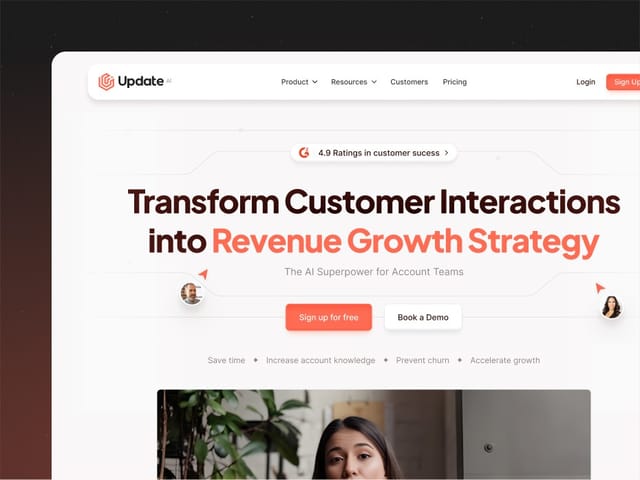
- Update.ai: we designed and built the site for this AI product, a category where visitors need to understand what's new in one screen. See the Update.ai project.
- Minexa: we designed and built the site for this AI company, where the copy has to explain the tool without buzzwords. See the Minexa project.
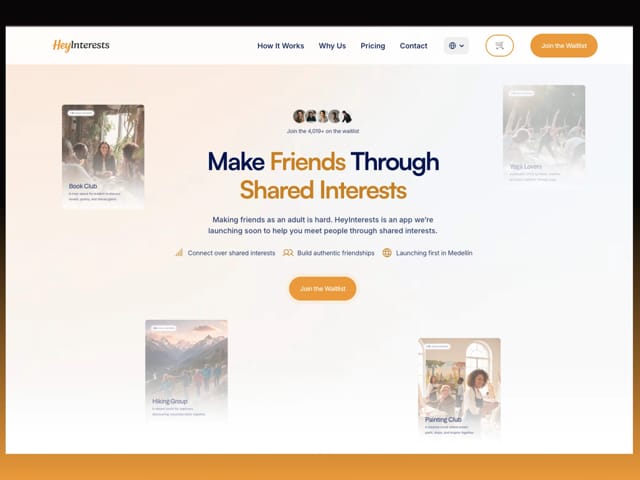
- HeyInterests: we designed and built the site for this social and community product. See the HeyInterests project.
What happens after your Framer site launches?
After launch, your team owns the site. Framer's editor lets non-designers change copy, swap images and publish CMS entries, and we set up the components so those edits can't break a layout. Most teams never need us for day-to-day changes.
When you need new pages, campaign landing pages or a redesign of one section, you can book a one-off project or move to our monthly retainer at $6,000 a month, which covers ongoing design and development with no hourly tracking. Our guide to who updates your website after launch compares the options.
What happens on the intro call?
The intro call is free and takes 30 minutes. We'll ask what the site needs to do in the next 12 months, look at your current site and competitors, and tell you whether Framer, Webflow or Next.js fits. If it's a fit, you'll get a fixed scope and price in writing. If it isn't, we'll say so and point you somewhere better.
What to bring to the call
A link to your current site, two or three competitor sites, the pages you think you need, and any brand files you have. If you're still unsure about your brand, our $3,000 brand and design sprint can come first.
If you'd rather test the working relationship before a full project, our $1,000 trial week gives you one week of design and development to see how we work.