



















What do San Francisco AI startups need from a website?
An AI startup's site has to prove the product works before the visitor believes it. Bay Area buyers have seen hundreds of AI-powered homepages, so a gradient and a claim about agents won't move them. What does move them is showing the product doing a real task, in the first screen, with the limits stated honestly.
- A demo above the fold. A short loop, an interactive sample or a real output, not an abstract illustration.
- One sentence on what it replaces. The job, the old way, and what's different now.
- Trust before signup. What happens to customer data, whether it trains models, and who to ask. A dedicated AI trust page answers most of this.
- Pricing that explains usage. Seats, credits or tokens, with an example bill.
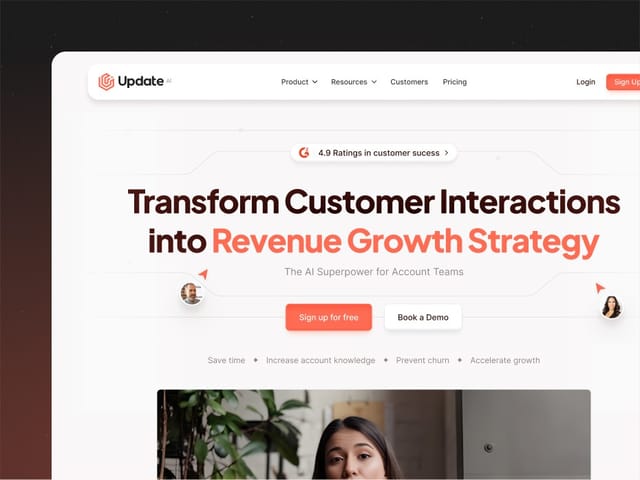
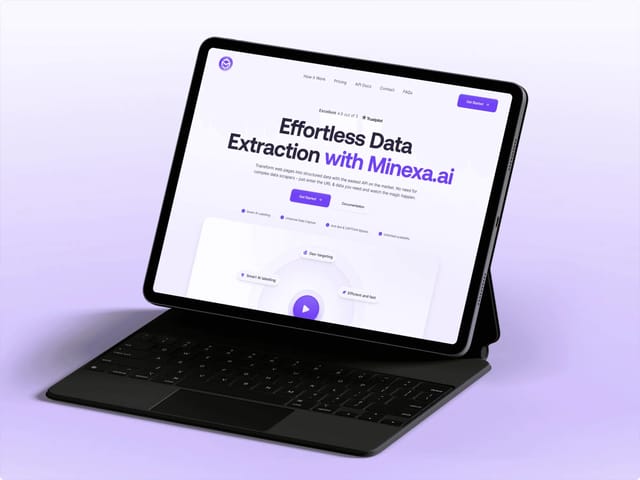
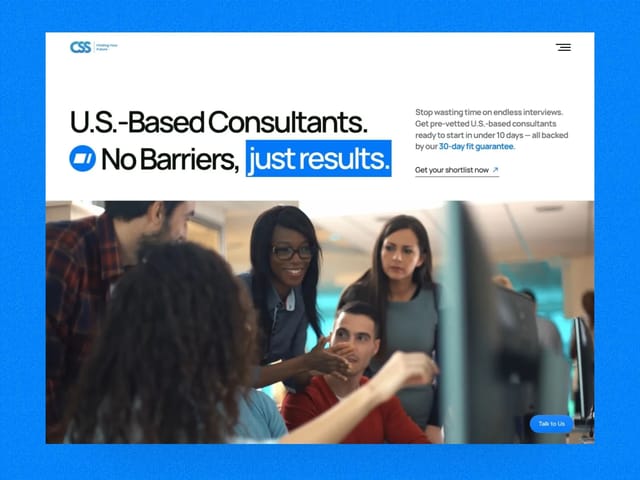
We designed and built Update.ai's site, and our AI work also includes Minexa and CSS Inc. Our pages for AI agent companies and generative AI startups cover the patterns in more depth.
What do developer tools companies need?
Developers decide in minutes and distrust marketing language, so a devtools site should get them to code fast. The homepage is a router: it sends engineers to docs and a quickstart, and sends the buyer who signs the contract to pricing, security and case studies.
Page | What developers check | What the buyer checks |
|---|---|---|
Homepage | A real code sample, supported languages | Who uses it, what it replaces |
Docs and quickstart | Time to first working call | That docs exist and look maintained |
Pricing | Free tier limits, usage rates | Predictable cost, enterprise path |
Changelog | Shipping pace, breaking changes | That the product is alive |
Security | Auth, data handling, self-hosting | Certifications held, a contact for review |
We design docs-adjacent marketing pages and the visual system that docs can share. Read what developers actually want to see and developer documentation design for the full breakdown.
One detail matters more than most: code samples on the marketing site must actually run. Developers copy them. A sample with an outdated method name or a missing import costs more trust than having no sample at all, so we pull snippets from your docs or have your engineers confirm them before launch.
Why build a San Francisco startup site in Next.js?
Engineering-led teams usually want the marketing site in the same stack as the product, in a repo they can review. We build in Next.js by default for that reason: components your engineers can read, pull requests they can comment on, and hosting on the platform you already use.
It isn't always the right call. If your marketing lead will own the site and wants to publish without engineers, Framer or Webflow can be the better choice, and we build in both. The trade-offs are in our Next.js development page and in Next.js marketing website cost.
How do we work on Pacific time?
San Francisco runs on Pacific time, UTC−8 in winter and UTC−7 from mid-March to early November. It's the far end of the working world: its morning is late afternoon in London and its afternoon is late evening across Europe and the middle of the night in most of Asia. So we lean on written, async work, and keep live calls short and inside your day.
- Standing call slot. Agreed when we scope the project, inside the Pacific-time workday.
- Async by default. Written updates and recorded walkthroughs so you review on your schedule, not ours.
- Code in your repo. For Next.js builds, work arrives as pull requests your engineers can review and merge.
- One decision-maker. One person on your side approves, which keeps a fast-moving team from sending mixed feedback.
Because so much happens in writing, we keep a short decision log in the project doc: what was approved, by whom and why. When a new hire joins or a founder is away fundraising for a week, nobody has to reconstruct the context from a call recording. Read what to expect week to week for how a typical week runs.
How do you launch around a raise or a Demo Day?
Many Bay Area startups redo the site around a funding announcement, a Demo Day or a public launch. The deadline is fixed, so the scope has to flex. We decide early what must be live on the day and what can follow a week later, and we write the launch page first because it carries the announcement.
Free intro call
Thirty minutes on Pacific time to learn the product, the date and the audience, and confirm the fixed-price offer.
Launch message
We write the headline, the demo story and the proof first, because every other page borrows from them.
Design
Custom design in Figma around a real product demo, reviewed async with one live call per milestone.
Build and ship
Next.js build with animation, analytics and forms. Must-have pages go live on the date, and the rest follow. Timelines are scoped on the intro call.
A hypothetical launch plan
For example, suppose a seed-stage AI agent startup has a funding announcement in a few weeks. It could start with our $6,000 landing page as the launch page, with a demo loop, the announcement and a waitlist form. After launch it adds pricing, security, docs links and two use-case pages through the $8,000 website or the $6,000 monthly retainer. See AI waitlist and launch pages for what to build first.
How much does a startup website cost in San Francisco?
Our prices are the same everywhere: $8,000 for a website of up to 6 pages plus $500 per extra page, $6,000 for a landing page, $3,000 for a brand and design sprint, and $6,000 a month for a design and development retainer. Typical US agency rates we see quoted run about $80 to $180 an hour, and agency Next.js builds commonly run about $20,000 to $120,000, though quotes vary widely by scope.
The trial week is $1,000 if you'd like to test us on one real page before committing. Otherwise the next step is a free 30-minute call, and every offer is on our pricing section.