

















What does a B2B SaaS design agency do for a startup?
A B2B SaaS design agency turns what your product does into a brand, a website and an interface that buyers can understand and trust. For an early-stage company, that usually means three jobs in order: a clear identity, a marketing site that converts the traffic you already have, and product UI that keeps up with the roadmap.
Most startups hire for these separately and pay for the gaps. The brand agency hands over guidelines that don't cover UI. The web designer hands a Figma file to a developer who can't match the motion. The product designer invents new components because the site's design system was never built for the app. We do all three with one team, starting with the words, so the promise on the home page is the same one the product keeps. Our complete guide to SaaS website design covers the marketing site side in depth.
Which buying motion is your SaaS site built for?
Your site should be built for how you actually sell, because the motion decides the primary CTA, the pages and the proof. A self-serve product needs a short path to signup. A sales-led product needs a site that arms a champion to convince a buying committee. Many B2B SaaS companies are hybrid and need both paths without confusing either visitor.
Self-serve (PLG) | Sales-led | Hybrid | |
|---|---|---|---|
Primary CTA | Start free or sign up | Book a demo or talk to sales | Sign up, with a sales path for teams |
Pages that carry weight | Pricing, product tour, templates | Use cases, security, customer stories | Pricing with an enterprise tier, plus both sets |
Proof that works | Product visuals, reviews, usage numbers | Logos, case studies, security details | Both, split by audience |
Common mistake | Hiding pricing or forcing a demo | Vague copy that a champion can't forward | One CTA trying to serve two buyers |
We go deeper on each in PLG website design and sales-led SaaS websites. If you're unsure which CTA to lead with, our guide to free trial vs demo helps you decide.
What pages does a B2B SaaS website need?
A B2B SaaS website needs a home page, product or feature pages, pricing and a way to start, then the pages that answer late-stage questions. Those later pages are where enterprise deals stall when they're missing, so we plan them from the start even if they ship in a second phase.
- Home: the job, the buyer, the result and a real view of the product.
- Product and feature pages: one page per core job, each with its own proof.
- Use case or industry pages: for each team or vertical you sell to.
- Pricing: plans in plain units, with a clear enterprise path.
- Integrations: a directory with a short detail page per integration. See our guide to SaaS integrations pages.
- Security: what you hold, how data is handled, who to contact. See what a SaaS security page needs.
- Customer stories: a format sales will actually send.
- Comparison pages: honest pages for the competitors buyers already name.
A six-page site usually covers home, product, pricing, one use case, security and a demo or signup page. The CMS then lets your team add use cases, integrations, stories and changelog entries without a developer.
What does B2B SaaS branding need to do?
B2B SaaS branding needs to make you recognizable in a crowded category and give the product team a system it can build with. A logo and a color palette aren't enough. The brand has to set type, color roles, iconography, illustration and data visualization rules that work on a pricing page and in a dense dashboard.
The common trap right now is borrowing the look of one famous dev-tool brand: dark backgrounds, thin gradients and tiny gray text. It looks modern for a month and then looks like everyone else. We'd rather separate the look from the method. Copy the restraint and the clarity, not the palette. Our brand and design sprint is a fixed $3,000 way to settle the identity and explore ten website or product directions before you build.
How does SaaS UX design fit with the marketing site?
SaaS UX design and the marketing site should share one design system, so the screenshots on the site match the product and new features look like they belong. When they drift apart, buyers notice in the trial, and your team pays twice for every component.
For product work we usually start from a solid component base, such as shadcn/ui for React teams, and add a custom layer only where the product needs it. That keeps engineering fast and the UI consistent. Product design runs best as ongoing work, so we do it on our monthly retainer, where the same designers and developers join your customer calls and ship alongside your team. Our product design service explains how that works.
What B2B SaaS work have we done?
We've designed and built marketing sites for several B2B software companies, each with a different problem to solve.
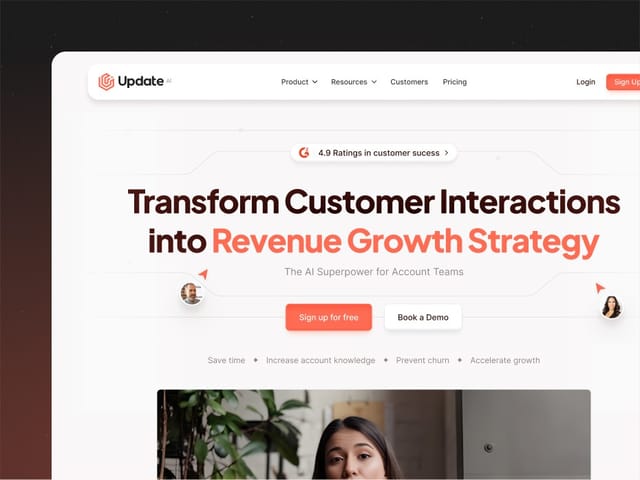
- [Update.ai](/work/update-ai): an AI platform for Customer Success teams. We did strategy, messaging, design and the Framer build, organized the story around three outcomes, and made product visuals from the real interface. The project grew into ongoing work on product pages, campaign pages and guides.
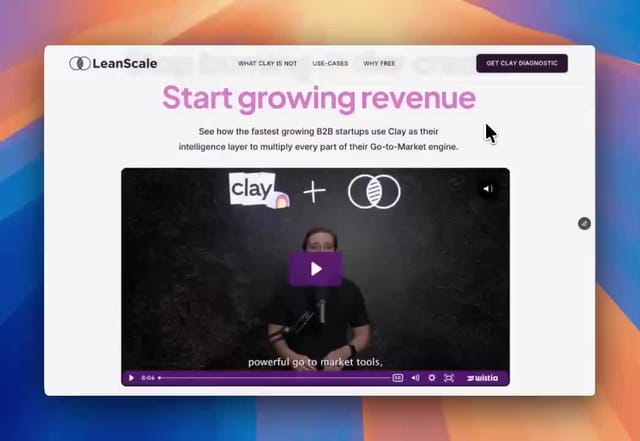
- [LeanScale](/work/leanscale): a conversion funnel for its Clay implementation consulting, aimed at investor-backed B2B startups. Designed in Figma and built in Framer, with an education-first structure and a free diagnostic as the main offer.
- [Minexa.ai](/work/minexa-ai): a data extraction product serving both non-technical users and developers. One core workflow on the page, then separate paths for the extension and the API.
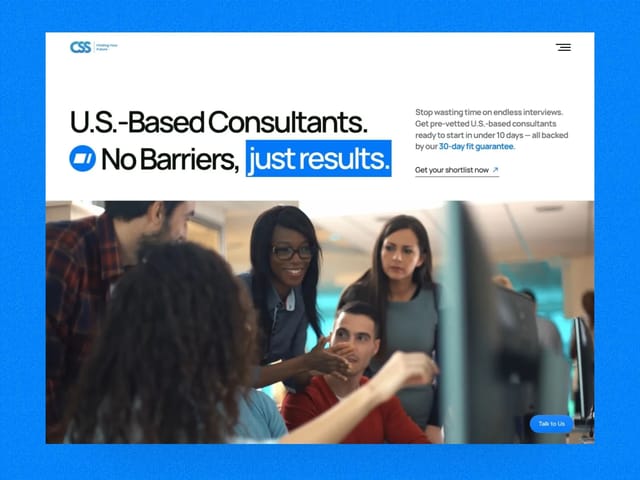
- [CSSinc.ai](/work/cssinc-ai): a US-based enterprise IT consultancy whose site had stalled with a previous team. We rewrote the narrative, rebuilt it in Framer and took it live in 21 days.
Should a B2B SaaS site be built in Framer, Webflow or Next.js?
Choose the platform by who edits the site and what it has to do. Framer is fastest for a small marketing team that wants to change pages visually. Webflow suits larger content teams with structured CMS needs. Next.js fits when the site needs custom logic, a large content library, strong performance control or a shared design system with the product.
We build in all three, so we don't push one. Our default package is a Next.js build, and we recommend Framer or Webflow when they're the better fit for your team. Our honest Webflow vs Framer verdict for SaaS covers the trade-offs, and our Next.js development page covers when code wins.
How do we work with B2B SaaS teams?
Intro call
A free 30-minute call. We look at your product, motion and current site, and recommend a sprint, a site, a retainer or a trial week.
Positioning and copy
We write first: who it's for, the job, what you replace, and the proof you can actually show. Layout follows the words.
Brand and system
We set or refresh the identity and build the design system the site and product will share.
Design
Custom page design in Figma, with real product visuals and the late-stage pages your sales team needs.
Build
A Next.js build with a CMS, or Framer or Webflow where that suits your team better, with motion and performance checks.
Launch and grow
Analytics and conversion tracking, SEO and AI-search checks, then a handover or an ongoing retainer for new pages and product work.
What does a B2B SaaS design agency cost?
Our prices are fixed. A website is $8,000 for up to six pages, then $500 per extra page, including copy, design, the Next.js build, a CMS and animation. Typical ranges we see quoted for startup redesigns run from about $12,000 to $40,000, and Next.js agency builds from about $20,000 to $120,000, so check what each quote includes.
- Brand and design sprint
- $3,000
- Website, up to 6 pages
- $8,000
- Design and development retainer
- $6,000/mo
Timelines are scoped on the intro call. Our SaaS website cost guide breaks down what drives the price if you're comparing quotes. The next step is a free 30-minute call.