



















What does the AEO score checker measure?
The checker measures whether answer engines can reach your pages, understand who you are, and quote you cleanly. Answer engine optimization (AEO) is mostly good SEO done carefully: Google's own AI features documentation says no special markup or AI-specific file is needed. So most checks are about access, structure and reputation, not tricks. For the full background, read our AEO guide for SaaS and B2B sites.
You answer each check yourself, with your site, robots.txt and analytics open. Nothing is fetched and no AI model is queried for you. Checks 1–4 can be verified in minutes with your browser and your CDN dashboard. The rest need an honest look at your pages and your brand's footprint elsewhere.
The 20 checks
- Crawler access: robots.txt allows the AI search crawlers you want citations from, such as OAI-SearchBot, PerplexityBot and Googlebot. Why: a crawler that's blocked can't fetch your pages to cite them.
- Crawler access: Your CDN or firewall bot rules don't block those crawlers. Why: bot protection can block them silently even when robots.txt allows them.
- Crawler access: Your main content is in the server-rendered HTML, not loaded only by client-side JavaScript. Why: many AI crawlers don't run JavaScript.
- Crawler access: Key pages are in your XML sitemap, indexable and return a 200 status. Why: pages that aren't indexed rarely get cited.
- llms.txt: An llms.txt file at your root lists your key pages with one-line descriptions. Why: it's cheap to add, though no study so far shows it lifts citations.
- Schema: Organization schema includes your name, logo, URL and sameAs links to your official profiles. Why: it states your identity consistently, as hygiene rather than a ranking boost.
- Schema: Page-level schema matches what's visible: Article with a named author, FAQPage, BreadcrumbList. Why: markup that contradicts the page is ignored or distrusted.
- Answer-first content: Each money page opens with a 40–60 word standalone answer that names the subject. Why: engines lift self-contained answers, and the top of the page gets quoted most.
- Answer-first content: H2s are phrased as buyer questions and answered in the first one or two sentences. Why: question-shaped sections map directly onto prompts.
- Answer-first content: Pricing, or how pricing works, is stated in text on your site. Why: buyers ask AI about price, and an engine can't cite a number you don't publish.
- Answer-first content: Comparisons, specs and costs are in real HTML tables or lists, not images. Why: text in images can't be extracted.
- Answer-first content: A visible FAQ answers real buyer questions on your key pages. Why: short, standalone answers are the easiest format to quote.
- Entity consistency: Your company name, one-line description and category match across your site, LinkedIn, directories and review sites. Why: conflicting descriptions make it harder for engines to know what you are.
- Entity consistency: An About page names the founders or team and says what you do, linking to official profiles. Why: it gives engines and buyers one clear source on who's behind the site.
- Entity consistency: Articles have named authors with author pages and credentials. Why: named expertise is a trust signal for both search and AI answers.
- Freshness: Key pages show a visible updated date that changes only when the content does. Why: engines and readers both favor current information.
- Freshness: Your money pages and top articles were reviewed in the last 12 months. Why: stale prices and features get quoted back to buyers wrong.
- Citations: Your brand was mentioned on trusted third-party sites (reviews, press, communities, partners) in the last year. Why: web mentions correlate with AI visibility more strongly than backlinks.
- Citations: In the last month, you checked what ChatGPT, Perplexity and Google say about you for 20–30 buyer prompts. Why: you can't fix answers you haven't read.
- Citations: AI referral traffic is tracked, with a GA4 channel group and a “How did you hear about us?” field. Why: without measurement you can't tell if any fix worked.
How should you read your AEO score?
Score | What it means | Focus next |
|---|---|---|
17–20 | Strong technical and content base | Earn more off-site mentions |
12–16 | Readable, with gaps | Answer-first rewrites of money pages |
7–11 | Engines can reach you but struggle to quote you | Access, structure and entity fixes |
0–6 | Likely invisible to some engines | Crawler access and rendering first |
The bands are our heuristic, not a benchmark. The checks aren't equal either. Crawler access is a gate: if checks 1–3 fail, nothing else counts for that engine. Check 5 (llms.txt) is the weakest: Ahrefs found 97% of llms.txt files got zero requests, and a 2026 SE Ranking study of 300,000 domains found no measurable citation lift. We keep it because it's quick, and our llms.txt generator builds one in minutes.
Hypothetical example: a Webflow SaaS site scoring 9
For example, suppose a Series A SaaS company runs the checker. Its CDN's bot protection blocks PerplexityBot, its pricing table loads from a script, its homepage opens with a slogan, and its LinkedIn and G2 descriptions name different categories. It passes the sitemap, schema, author and freshness checks: 9 out of 20. The order of work: unblock the crawler, put pricing in the HTML, rewrite the homepage opening as a direct answer, then align every profile to one description.
Which AEO fixes matter most?
Fix access first, then answer-first content on your money pages, then off-site mentions. Schema and llms.txt come last. Ahrefs' controlled 2026 schema test found no lift from adding schema, so treat it as hygiene. Off-site mentions are the opposite: in Ahrefs' study of 75,000 brands, web mentions correlated 0.664 with AI Overview visibility, against 0.218 for backlinks.
- Access: check robots.txt and your CDN's bot settings, then confirm the HTML contains your copy with JavaScript turned off. See allowing or blocking AI crawlers.
- Money pages: in TripleDart's Q1 2026 study of 28 B2B SaaS companies, homepages got 31.9% of LLM citations and 81.7% of AI-attributed leads. Rewrite the homepage, pricing and comparison pages before the blog.
- Entities: write one company description and paste it everywhere. Read entity SEO for startups.
- Measurement: set up AI referral tracking with our GA4 guide, then run a monthly prompt audit.
When should you get help?
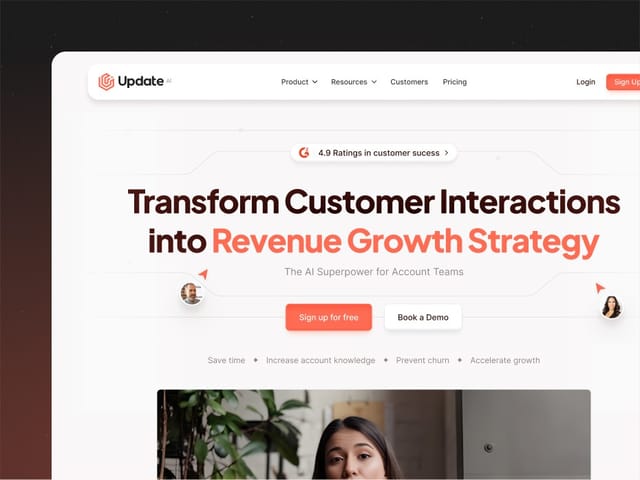
Get help when the failed checks are in rendering, structure or copy, because those mean rebuilding pages, not editing a setting. Our website package is $8,000 for up to 6 pages, with custom design, a Next.js build, a CMS and animation. We server-render every page and structure it answer-first. We designed and built Update.ai's site and work across AI and SaaS. See our AEO website service for how we approach the build. The next step is a free 30-minute call.