


















How does our MVP design service work?
Our MVP design service runs in two stages: a $1,000 trial week, then a $6,000-a-month retainer if you want to keep going. The trial week is one week of design and development on the part of your product that matters most. It lets you judge how we think, design and communicate on your real problem before you commit a month of budget.
- trial week of design and development
- $1,000
- per month after, flat, no hourly tracking
- $6,000
- projects for startups that have raised $300M+
- 60+
There's no long contract up front, because early-stage plans change. Many founders use the trial to settle a single question: can this team turn a messy idea into a clear first version?
What can a one-week MVP trial produce?
A trial week produces a focused, real piece of your MVP, agreed on the intro call, not a pitch deck about what we'd do. We pick the slice that removes the most uncertainty, usually the core flow a user goes through to get the product's main value.
- A core flow designed: the screens from signup to first value, with the states that matter, in Figma.
- A clickable prototype: the same flow linked up so you can test it with users or show it to investors.
- A first coded screen: if your stack is set, one key screen built so you can see how we work in code.
- A scope recommendation: what to build first, what to fake and what to cut from version one.
Why charge for it? A paid trial gets real work and real attention, where free spec work gets guesses. Our article on paid trials vs free spec work explains why good studios do it this way.
Clickable prototype or coded MVP: which should you design first?
Design a clickable prototype first when your biggest risk is whether users want it or whether investors understand it. Go straight to a coded MVP when demand is proven and the risk is whether it works with real data. Many founders need both, in that order.
Figma clickable prototype | Coded prototype | Coded MVP | |
|---|---|---|---|
Answers | Do people understand and want this? | Does the core interaction work? | Will people use and pay for it? |
Convinces | Investors, early users, your team | Technical co-founders, pilots | Paying customers |
Real data | No, it's simulated | Partly | Yes |
Change cost | Low | Medium | Higher |
Best when | Pre-raise or pre-validation | One risky interaction to prove | Demand is shown |
Our guides to Figma vs code prototypes and prototype vs MVP go deeper on the decision.
How do we scope and design an MVP?
Free intro call
Thirty minutes on the idea, who it's for, what you've validated and what you have to show by when.
Pick the core job
We name the one job the MVP must do for one user, and write it down in a sentence everyone agrees on.
Cut the scope
We list every feature, then sort them into must have, fake for now and later. Most MVPs start too big.
Trial week
For $1,000 we design, and where useful build, the core flow, so you see real output in one week.
Design the rest of version one
On the retainer we design the remaining screens and states, reviewed with you each step.
Build and launch
We build what we design in your stack, or alongside your developer, and prepare the launch.
Learn and iterate
We join early user calls and turn what we hear into the next set of changes.
What should MVP UI design cover, and what can wait?
MVP UI design should cover everything a user touches on the way to the product's main value, and almost nothing else. Polish the path, not the edges. Our guide to scoping an MVP has the full method.
- Design now: signup and onboarding up to the first value moment, the core screen, empty, loading and error states on that path, and basic settings.
- Design now: the words. Clear labels and onboarding copy do more for an early product than visual polish.
- Can wait: a custom design system. Start from shadcn/ui or a similar library; practitioners commonly cite two or more designers or three or more engineers as the point where a custom system pays off.
- Can wait: dark mode, advanced permissions, multi-language support and secondary dashboards.
How much does MVP design cost?
MVP design typically costs $2,000 to $40,000 in the quotes we see, depending on how many screens, how much research and whether development is included. Fixed prices are rare, which is part of why founders struggle to compare options. Our MVP design cost guide breaks the range down by scope.
With us, the first step is a fixed $1,000 for the trial week. After that, the retainer is $6,000 a month, flat, and covers both design and development, so you aren't paying a designer and then separately paying someone to build the designs. How many months an MVP takes is scoped on the call, because it depends on the product, not on a template plan.
Already have a vibe-coded prototype?
Plenty of founders now arrive with a working prototype from Lovable, Bolt or a weekend of AI-assisted coding. That's a good start: it proves the idea and gives us something concrete to react to. The usual problems are inconsistent UI, missing states and code that gets harder to change with every prompt.
We can redesign the product properly and rebuild the parts that won't scale, keeping what works. Our guide to rescuing a vibe-coded app covers the process, and our best tech stack for a SaaS MVP piece explains why we usually build in Next.js.
Which early-stage products have we designed?
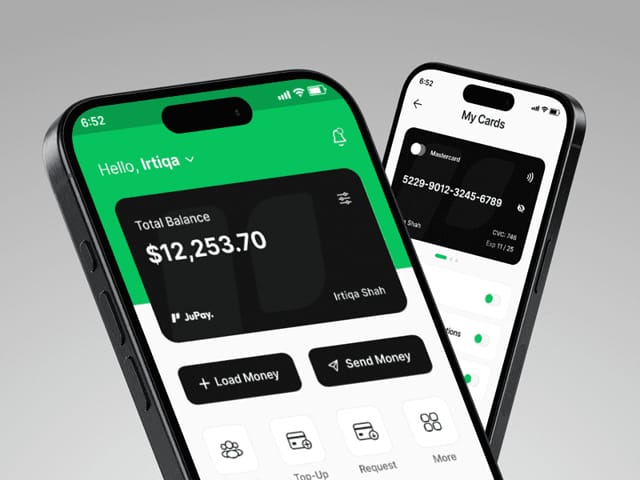
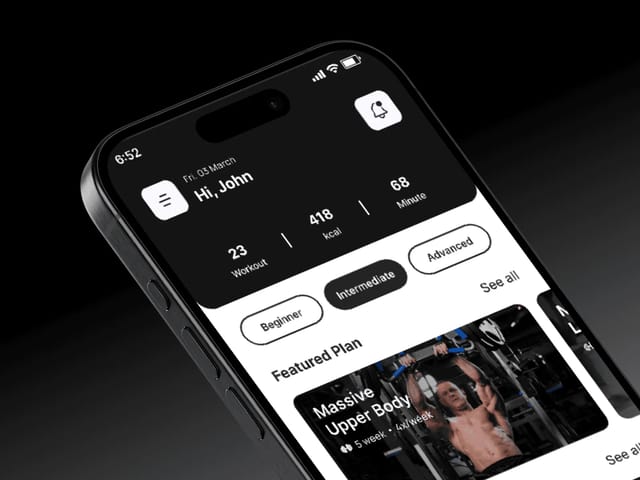
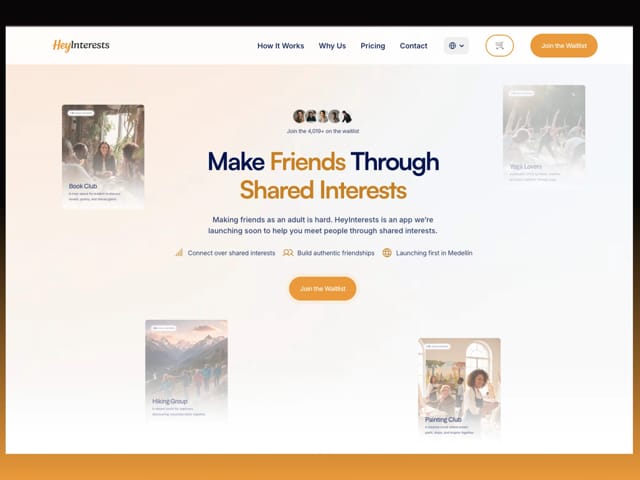
For JuPay, we designed a fintech mobile app with money transfers, card management and cross-border payments, where every screen had to make people feel safe moving money. For PowerPulse, we designed a workout app built around tailored routines. For HeyInterests, we led the copy, UI/UX design and build of a launch website made to grow the waitlist before the app went live.
Once your MVP has users and you need ongoing product work, our product design service is the same retainer with a different starting point. Comparing a studio against vetted freelancers? Our Toptal alternatives page sets out when each makes sense.