



















What's the difference between Designjoy and Designify?
Designjoy sells design as a subscription: you pay a flat monthly fee, add requests to a queue, and they're worked on one at a time. Designify is a studio: one small team writes the copy, designs the pages and builds them in Next.js, Framer or Webflow, either as a fixed-price project or on a monthly retainer.
Neither model is better in the abstract. A subscription is efficient when you already know what you need and someone on your side will build it. A studio is useful when the work starts before the design, with the message, the page structure and the copy, and ends after it, with a site that's live. We go deeper on the subscription model in our Designjoy review, and on what a design subscription can and can't cover.
How do Designjoy and Designify compare side by side?
The table uses Designjoy's published pricing and limits as of 2026. Plans change, so check their site before you decide. Where their scope isn't in our research, we describe the model rather than guess.
Designjoy | Designify | |
|---|---|---|
Model | Design subscription with a request queue | Studio: fixed-price projects or a retainer |
Published price | $4,995/month (as of 2026; check their site) | $6,000/month retainer; projects from $3,000 |
Throughput | One active request at a time | A team working across copy, design and build |
Seats | 2 users | Your team joins calls and reviews |
Copywriting | You bring the brief and the words | We write the copy first, then design |
Development | Check their site for current scope | Next.js, Framer or Webflow build included |
Video, 3D, motion | Excluded | Web animation included; video production isn't |
Try before committing | Check their site | $1,000 trial week |
How much does Designjoy cost compared with Designify?
Designjoy's published plan is $4,995 a month as of 2026, with one active request and 2 users. Our retainer is $6,000 a month, so the gap is about $1,000 a month. What that difference buys is the part a design queue usually leaves to you: the words and the code.
- Designjoy's published plan, as of 2026
- $4,995/mo
- Designify design and development retainer
- $6,000/mo
- Designify fixed-price website, up to 6 pages
- $8,000
- Designify trial week
- $1,000
If you only need a site rebuilt once, a monthly plan may be the wrong unit altogether. Our fixed-price website is $8,000 for up to 6 pages, plus $500 per extra page, and our landing page is $6,000. A brand and design sprint is $3,000. Full prices are on our pricing section, and we compare monthly options across the market in design subscription pricing.
What does one active request mean for a startup?
One active request means the next task starts when the current one is approved. For a steady flow of small, separate jobs, such as ad sets, social graphics or a deck refresh, that's fine and keeps priorities clear. For a launch, where the homepage, pricing page, product visuals and email assets all need to move in the same week, it creates a line.
The second limit is development. A designed page in Figma isn't a live page. If you don't have a developer with spare time, budget for the build separately. We cover how subscriptions usually handle this in how Designjoy-style subscriptions handle web development.
Who should pick Designjoy?
Pick Designjoy if your team already knows what it wants designed, has a developer or a no-code builder to ship it, and produces a steady stream of discrete design tasks. A marketing lead who needs ad creative, one-pagers and social assets every week, with clear briefs, is the buyer the model serves best.
Pros
- Flat, published monthly price with no proposal cycle
- A clear queue keeps priorities simple for one decision-maker
- Good fit for steady, small, well-briefed design tasks
- Works well when you have your own developer
Cons
- One active request at a time slows multi-asset launches
- 2 users can be tight for a growing team
- Video, 3D and motion are excluded
- Copy and strategy are on you; check their site for development scope
Who should pick Designify?
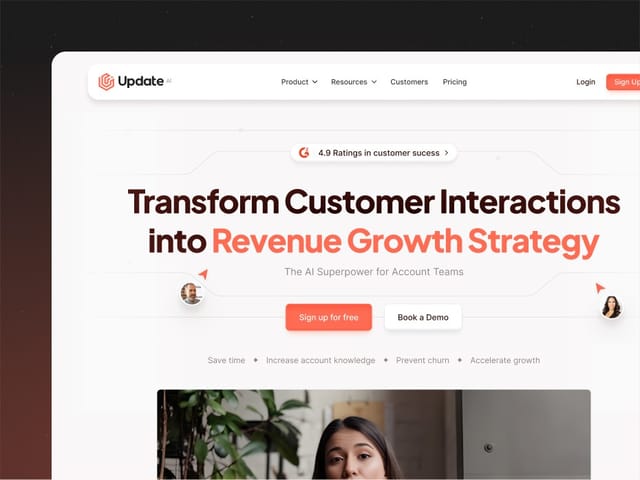
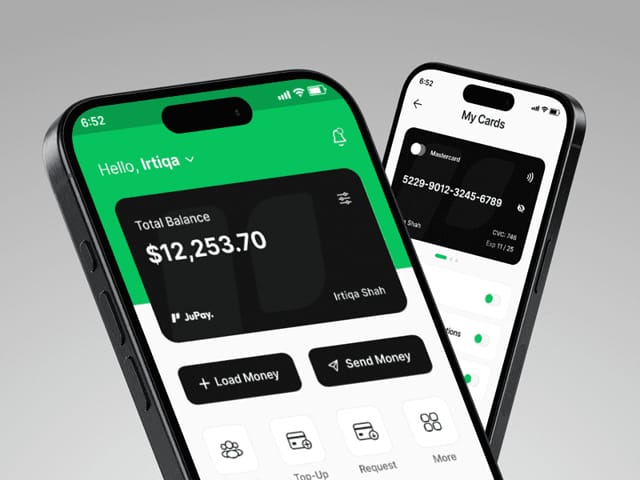
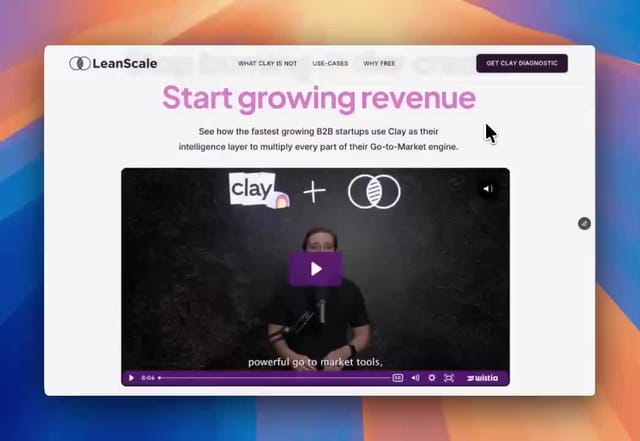
Pick Designify if the website itself is the project: you need the positioning and copy worked out, the pages designed, and the site built and launched by the same people. That's where most of our work sits. We designed and built Update.ai's site, and we've shipped sites for fintech, data and accounting startups such as Jupay and LeanScale.
- You don't have a developer to spare. We build in Next.js, Framer or Webflow, so design and code don't get lost in a handoff.
- The message isn't settled. We start with the words, because a strong layout can't rescue a vague headline.
- You need parallel work. On the retainer, the team works across pages, product UI and build at once and joins your customer calls.
- You want a fixed price for a defined scope. Projects have one price agreed upfront, with no hourly tracking.
We're not the right pick for high-volume ad creative, video or 3D. A subscription, or a creative production company, is better for that work.
Can you test Designify before committing to a retainer?
Yes. Our trial week is $1,000 for one week of design and development on a real piece of your site. You see how we write, how we design, how fast we ship and how we communicate before you sign up for a retainer or a project. Our guide to running a paid trial week explains what to test and how to judge the result.
What a fair trial week should prove
A trial week should answer three questions. Can this team understand your product from a short brief? Is the first draft of the copy close enough to edit rather than rewrite? Does the shipped work match what was designed? If the answer to all three is yes, the longer engagement is a smaller risk.
For example, suppose you use the week on a new pricing page. By Friday you should have the copy, the design and a working build to review, not only a mockup.